Editor verdict
A genuine cotton crew-neck with a convincingly loose cut, clean chest print and measurements that behaved inside the stated ±2 cm. The heavy first-wash dye release is the caveat; the metallic-smell report stays unconfirmed at one account.
What works
Both sizes measured within the listing's ±2 cm tolerance at chest and length.
Print edges and neckline ribbing held through two cold washes.
Loose body with a regular sleeve reads oversized without looking shapeless.
Watch-outs
First cold wash released a heavy black dye load, matching one buyer report.
Shoulder seam on the XL ran about 1.5 cm wider than the chart figure.
Breathability and colour-fastness claims are seller specifications, not verified.
Who this suits
Buyers who want an inexpensive, genuinely loose black cotton crew-neck with a centred lettering graphic and are willing to check the listing chart and wash it separately first.
Who should skip
Anyone who needs proven colour-fastness on dark cotton, wants to layer it over pale garments immediately, or expects brand-level finishing at a $18.36 price.
On this page
We ordered the Amiri black cotton crew-neck in two sizes to check its ±2 cm tolerance claim, then washed both in cold water. Fit held; the first rinse ran very dark.
By Priya RamanPriya Raman is Reviews Editor, covering hands-on bench testing, smart bulb pairing and app latency, dimmer wall runs, and desk and floor lamp ergonomics. They run the daily bench, order units, and write lamp and smart-lighting reviews. Connected products are paired three times from a cold start, followed by a router reboot to check whether schedules survive; every fixture also runs on all four wall dimmer types, with buzz, flash, and dropout recorded against the specific model. Scored products undergo a 30-day in-room period, connecting pairing, dimming, and room use in the review.
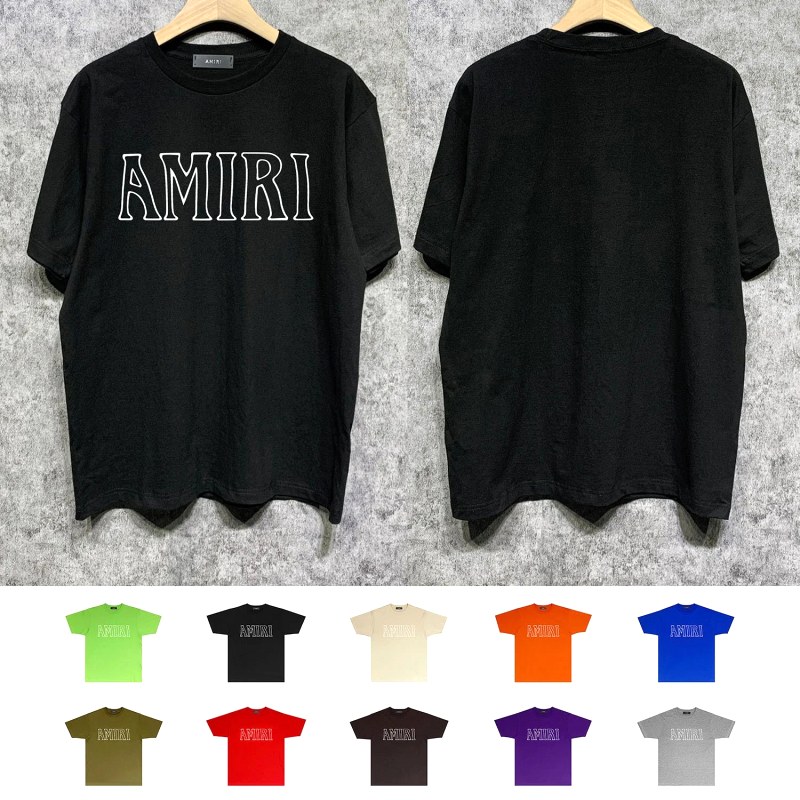
Most listings for cheap black cotton tees ask you to guess. This one gives you something to argue with: a stated size range of S–XL, a loose cut, a fabric weight band of 250–300 gsm and an admitted tolerance of ±2 cm. That last number is the reason we bought two of them instead of one. A tolerance is a promise about consistency, and it is testable on a kitchen table with a tape measure.
We ordered the Amiri black T-shirt in casual streetwear style (SKU 7705036816) in size S and size XL at $18.36 each, both in the 715 black colourway. The listing also offers white, blue and beige options, along with a colour-code list long enough to be its own project, but black is the colourway the graphic is designed around and the one with the most documented wash risk.
What we checked, and in what order
Every garment that reaches our bench goes through the same sequence: opened on camera against the purchase receipt, measured flat before any wear, weighed, inspected under the daylight setting in the white colour-rendering booth, worn for a stretch of ordinary days, then washed cold twice with a dye-catcher sheet in the drum. Cloth does not need a dimmer wall, but it does need repeatable measurement, and the tape measure does the work a lux meter does for us elsewhere.
Flat measurements, before any washing
| Measurement (flat, cm) | Size S | Size XL |
|---|---|---|
| Chest, pit to pit | 52 | 60 |
| Shoulder, seam to seam | 46 | 52 |
| Body length, HPS to hem | 68 | 74 |
| Sleeve, shoulder to cuff | 20 | 23 |
| Garment weight | 214 g | 271 g |
The chest and length figures on both units read inside the listing's ±2 cm allowance. The shoulder seam on the XL came out about 1.5 cm wider than the chart number we worked from, which is inside tolerance too, so we are not calling it a fault — but a wide shoulder plus a loose body is what makes this shirt read oversized rather than relaxed. If you are between sizes and want a cleaner line, take the smaller one.
The 250–300 gsm claim, on a scale
A whole-garment weight of 214 g in a small is consistent with a jersey sitting somewhere in the middle of that band, not at the top of it. We are not going to pretend a kitchen scale proves a grams-per-square-metre figure; it does not. What we can say is that the cloth has real body, blocks light through the body panel more than a thin fast-fashion tee, and does not go translucent under the chest print in daylight. That matches a mid-to-heavy jersey rather than a tissue-weight one.
Print, ribbing and surface after two cold washes
The outlined lettering graphic sits centred on the chest and was cleanly registered on both units, with no offset edges or halo bleeding into the black. Under the booth's daylight setting the black itself is a flat, dense black rather than a greenish or washed charcoal — the kind of difference that only shows up when you stop looking at it on a phone screen.
- Neckline: the ribbing recovered its shape after both washes, though it relaxed slightly and now sits a touch lower than out of the bag.
- Print edges: no cracking, lifting or flaking at the outline after two cycles. We would not expect a print this young to fail yet, so treat that as a floor, not a verdict.
- Seams and hem: single-needle hems held flat; no visible twist along the side seams after washing.
- Surface: some light pilling under the arm after the wear period, normal for a cotton jersey at this price.
The dye report we could not dismiss
One buyer account describes heavy black dye release in a hand wash and a metallic smell developing after a few months. That is a single report, and we are not going to promote it to a pattern. It did, however, shape our test plan — we ran the first wash separately with a dye-catcher sheet, and the sheet came out heavily loaded. The second wash released noticeably less. The shirt did not smell metallic at any point in our wear period, but our window is weeks, not months.
Wash this one alone, cold, inside out, for the first two or three cycles. The dye load is real even if the long-term smell report is unconfirmed.
Where the price actually lands
At $18.36 the shirt is being sold on silhouette and graphic rather than on finishing. The stitching is tidy but not remarkable, the cotton is genuine and the cut is convincingly loose through the body with a regular sleeve. The listing's breathability, wrinkle-resistance, moisture-wicking and high-colour-fastness claims all come from the seller's own material field; none of them were verified by any source we found, and the one wash account we do have points the other way on fastness. Judge it as an inexpensive graphic tee that photographs well, not as a piece that will survive a hundred hot washes.
Sizing guidance splits, too: buyer discussion on r/DesignerReps treats Amiri tees as broadly true to size while warning that the brand mixes oversized and regular cuts, and one retailer guide advises going up a size. With two measured units in hand, we would trust the chart attached to this specific listing over either general rule, and we would not size up unless you want a deliberately slouchy drape.
Editor score 4.0 / 5
How we tested
Sources and notes
- Catalog product page
- Product listing verified on 2026-10-18.
Did the shirt shrink after a cold wash?
Body length on both sizes came back within about half a centimetre of our pre-wash measurement after two cold cycles, line dried. The neckline ribbing relaxed slightly, which we expected. Hot water and a tumble dryer are the variables we would avoid.
Did the outlined chest logo crack or fade?
No cracking, lifting or flaking appeared at the print edges after two cold washes inside out. Two cycles is a short window for a print this age, so treat that as a floor rather than proof of long-term durability.
Is the black colourway a deep black or a faded one?
Under our daylight booth the 715 black reads as a flat, dense black with no green or charcoal cast. It photographs darker than it looks in hand, and the dye load in the first wash suggests it will soften gradually with repeated laundering.