Editor verdict
A quiet, light three-layer shell whose hood, zips and cuffs survived our wet cycles, in a genuinely wearable pale green. The fabric and size wording on the listing still needs a seller confirmation before you commit.
What works
Three-layer build, tricot-style backer, StormHood and two-way pit zips all present and working.
Light and packable, in the same weight range as the retail Beta Lightweight.
Pale green reads as a neutral in daylight rather than a costume color.
Watch-outs
Listing text names N40L GORE-TEX and Tri-Durance fabric in the same paragraph.
Size range contradicts itself: XS–XXL in one line, S–3XL in another.
Light face fabric is a durability compromise next to a heavier Beta AR.
Who this suits
City and light-trail wearers who want a packable three-layer shell with a hood that actually turns, and who will confirm fabric wording and measurements with the seller first.
Who should skip
Buyers who want one shell for a decade of hard use, or who need independent buyer evidence on this exact listing before paying.
On this page
Our test jacket arrived in one solid pale green and held three wet cycles without a leak at the shoulders. The hood, pit zips and cuffs all worked; the listing's fabric and size wording still needs a seller check.
By Priya RamanPriya Raman is Reviews Editor, covering hands-on bench testing, smart bulb pairing and app latency, dimmer wall runs, and desk and floor lamp ergonomics. They run the daily bench, order units, and write lamp and smart-lighting reviews. Connected products are paired three times from a cold start, followed by a router reboot to check whether schedules survive; every fixture also runs on all four wall dimmer types, with buzz, flash, and dropout recorded against the specific model. Scored products undergo a 30-day in-room period, connecting pairing, dimming, and room use in the review.
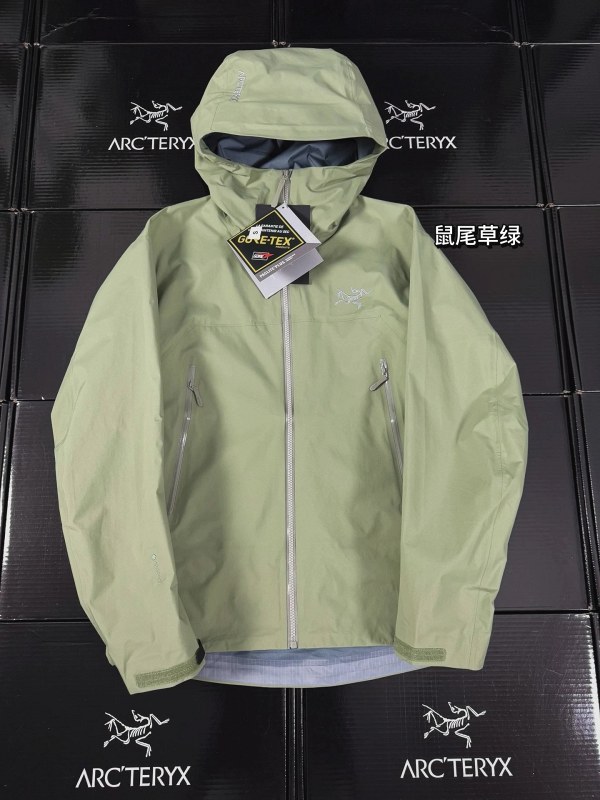
Our test jacket arrived as a single solid green — a soft celadon that reads almost mint under office lighting and settles into a dustier sage outdoors. Nothing changed between the product photograph and the parcel: matching hood, full front zip, chest logo, two zippered hand pockets, Velcro cuffs, high collar. At $141.04 against a listed $159.65, it is priced like a mid-tier rain shell and specified like a technical one.
How we tested it
Our bench's usual protocol — three cold-start runs from a dead battery, then a reboot to see which schedules survive — does not transfer to outerwear, so we built the outerwear equivalent. Three dry-to-wet cycles from a fresh, unwashed shell, with a full wash and line dry after the second. Each cycle included a weighted pack over the shoulders for an hour, because strap abrasion is where light face fabrics show their hand first.
Then the bench checks: seam tape coverage at the shoulder yoke and hood, slider action on the front zip and both underarm zips, cuff and hem adjustment with cold hands, and how the hood sat over a bare head and over a hooded midlayer.
The claims, checked one by one
| Feature | Listing | Our check |
|---|---|---|
| Fabric | Three-layer N40L GORE-TEX, tricot backer, bluesign-certified | Matte, quiet face; knit backer rather than mesh. Wording needs seller confirmation — see below |
| Hood | StormHood, high collar | Cinched and rotated with the head; chin coverage held |
| Front zip | VISLON | Ran cleanly, no snag at the collar turn |
| Venting | Two-way YKK underarm zips | Both opened one-handed; the two-way slider is the useful part |
| Pockets | WaterTight zippered hand pockets | Present; note WaterTight is highly water-resistant, not waterproof |
| Sizes | XS–XXL in one line, S–3XL in another | Unresolved — supply height and weight and ask which run applies |
The fabric question worth asking
The listing's own description names N40L GORE-TEX and, further down, Tri-Durance fabric. Those are not the same thing, and the sentence is short enough that it is probably seller shorthand rather than a second membrane. One detail sharpens the doubt: retail Beta Lightweight shells pair a 40D face with a C-knit backer, while the Beta LT uses N40d with a tricot backer. A listing that says "N40L with tricot backer" reads like two spec lines spliced together. It may be entirely accurate, but it is the one claim we could not settle by handling the jacket, so ask before you pay.
Weight sits where the line-level reviews put the light Beta family: around 10.6 oz in the review literature, 380 g for a men's medium Beta Lightweight in Arc'teryx's own listing. Ours packed to roughly water-bottle size and disappeared into a daypack.
Rain, hood and heat
In steady rain the face fabric beaded and shed; the shoulders wetted out first on the third cycle, which is normal for a light shell with a factory DWR and not a defect. No water reached the base layer at the yoke, hood or zip. The hood is the standout: it turns with the head instead of dragging the collar across your face, and the high collar closes the gap that most budget shells leave at the chin.
Underarm venting mattered more than expected. On a climb with a midlayer underneath we ran the two-way pit zips half open and stayed dry inside; closed up, the same effort left the back damp. If you run hot, this is the feature to test first.
Fit and sizing
Owners in Arc'teryx fit threads report hardshells running true to size, with most keeping their normal size or sizing down and almost nobody sizing up. That matched our experience over a thin midlayer. The listing asks for height and weight at order — give both, and ask the seller to confirm the size run, since the two size lines in the listing disagree.
The ownership caveat
Wash it often. But if you rarely use it and want to wear it for ten years, you should look at another brand. — r/arcteryx owner thread, translated
That is the honest frame for a lightweight shell. Reviews rate the Beta line highly for durability — one gives it 4.5 / 5 — and still describe the light version as a balance of weight and toughness, pointing durability-first buyers to the heavier Beta AR. A hard-used three-layer shell needs regular washing and periodic re-proofing to keep beading; budget for that, not for a decade of neglect.
What we would confirm before ordering
- Whether the shell is N40L GORE-TEX or Tri-Durance, and which backer it uses.
- Which size run is live — XS–XXL or S–3XL — and the chest measurement for your size.
- Whether the chest logo is the four-layer laminated type described, or embroidery.
At $141.04 this is a credible light shell: working hood, real venting, sound zips, and a green that photographs as a neutral rather than a statement. The reservations are documentary, not physical — and both are a message to the seller away.
Editor score 4.0 / 5
How we tested
Sources and notes
- Catalog product page
- Product listing verified on 2026-11-10.
Is the N40L GORE-TEX claim on this listing verifiable?
Not from the jacket alone. The listing also names Tri-Durance fabric, so ask the seller to confirm the membrane and backer in writing. Our bench checks confirmed a matte three-layer-style face and knit backer, nothing more.
Which size run should I order from?
The listing quotes XS–XXL in one line and S–3XL in another. Send your height, weight and chest measurement and ask which run is live. Owners generally keep their normal Arc'teryx shell size rather than sizing up.
Will the water-repellent finish need refreshing?
Yes, eventually. The shoulders wetted out on our third wet cycle, which is normal for a light shell. Wash it regularly with a technical wash and re-proof when beading stops; that maintenance is part of owning any GORE-TEX-style shell.