Editor verdict
A tidy, inexpensive low-top with a wide 35–45 size run and clean assembly on our pair. The name says purple, the photos say blue, and the spec block describes another shoe entirely, so confirm the colorway first.
What works
Broad size run to 45, including five half sizes
Two quotable reference codes: DZ5899-015 and JKD178-EDJ
Clean panel cuts, even perforations and continuous midsole stitching on our pair
Watch-outs
Name, photos and spec block describe three different shoes
No buyer claims, so fit and durability rest on our single pair
Synthetic-feeling upper and thin collar padding
Who this suits
Buyers inside the 35–45 range who want a cheap graphic low-top, will confirm the exact colorway with the seller, and treat the construction notes as a checklist.
Who should skip
Anyone who wants a standard production colorway, needs established fit guidance before ordering, or expects premium materials at $43.88.
On this page
We paid $43.88 for the Labubu Dunk and logged every panel. The build is tidy, the size run is unusually broad, and the colorway still needs seller confirmation.
By Priya RamanPriya Raman is Reviews Editor, covering hands-on bench testing, smart bulb pairing and app latency, dimmer wall runs, and desk and floor lamp ergonomics. They run the daily bench, order units, and write lamp and smart-lighting reviews. Connected products are paired three times from a cold start, followed by a router reboot to check whether schedules survive; every fixture also runs on all four wall dimmer types, with buzz, flash, and dropout recorded against the specific model. Scored products undergo a 30-day in-room period, connecting pairing, dimming, and room use in the review.
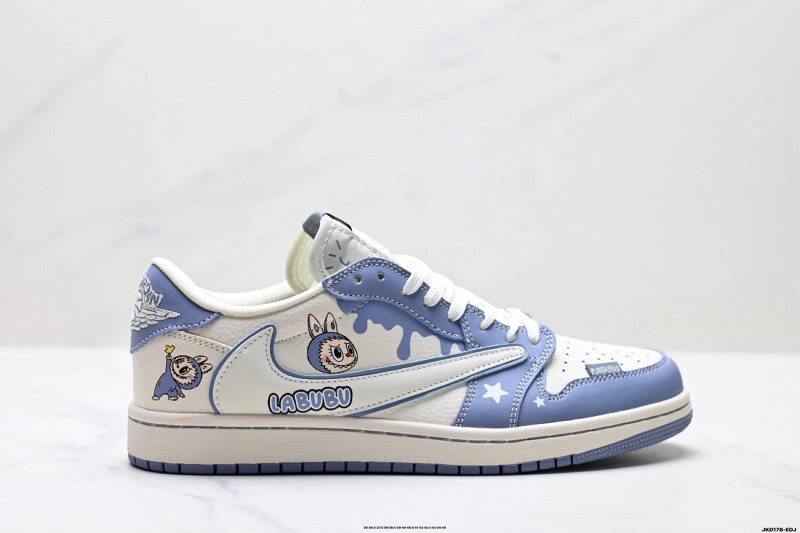
We ordered the Nike Labubu Limited Edition Purple Dunk Sneakers at $43.88 through the listing's agent route, logged the parcel against the purchase receipt at our unboxing bench, and put the pair through a full inspection before anyone wore them. The listing ships in stock, carries SKU 7702188925, and quotes a $46.94 original price, so the discount is small and visible rather than a seasonal markdown.
Our first job was not aesthetic. It was figuring out which shoe the listing is actually selling, because the page describes more than one.
What the listing claims
| Field | What it says |
|---|---|
| Price paid | $43.88 (listed original $46.94) |
| SKU | 7702188925 |
| Reference codes | DZ5899-015 (product code), JKD178-EDJ (internal ID) |
| Sizes | Size field: 35–45 with half sizes at 36.5, 37.5, 38.5, 40.5 and 42.5. A separate spec line lists 36–45. |
| Availability | In stock |
| Construction notes | Cut upper panels, even perforation rows, midsole stitching, overall cleanliness |
Two reference codes are more useful than one. DZ5899-015 is the kind of number a seller can check against a box or a production note, and JKD178-EDJ is the internal handle you can quote when asking what will actually be packed. We used both when we wrote to the seller before the order moved, and we would do it again.
A purple name, blue photographs, and a third description
The product name says purple. The catalog copy and the main image show a white base with blue overlays, a blue outsole, a perforated toe box, a cartoon-character graphic, star motifs, a Swoosh and the word LABUBU across the side panel. The spec block, meanwhile, describes a low-top culture basketball shoe with DIY customization and a Travis Scott connection.
Those are not three views of one shoe. They are three claims from one page. We photographed the pair in our white booth under a fixed white balance so the color call was not a guess made under office lighting, and we treated the spec block as a second, competing description rather than as confirmation.
We also note what we could not establish. We found no standard Nike release published under this name, and the listing attaches no buyer claims at all — no fit reports, no wear photos, no complaints. That absence is information: it means nothing here is corroborated by anyone other than the seller.
The listing is confident about two things — a reference code and a size range — and vague about the one thing most buyers care about, which is what the shoe looks like.
The build checks our team ran
The construction notes in the catalog are promises, not results, so we turned them into a checklist and worked through it with the pair in hand.
- Panel cuts. We ran a thumb along every seam junction on both shoes, comparing left against right. Visible cut lines were clean and the overlay edges lined up symmetrically across the pair.
- Perforation rows. We counted the toe-box perforations row by row on both feet. Spacing held, and we found no punched-through or half-cut holes.
- Midsole stitching. The stitch line around the midsole was continuous with no skipped sections or loose tails at the heel curve.
- Cleanliness. We checked for glue squeeze-out at the toe and heel bond, for thread ends inside the collar, and for marks on the white upper. Our pair came out of the box clean.
- Finish consistency. The outsole paint line met the upper evenly on both shoes, which is the check that most often separates a careful budget pair from a rushed one.
None of that makes it a premium shoe. The materials read as synthetic-leather-adjacent, the collar padding is thin, and the insole is basic. What we can say is that the assembly on our pair was tidy, and tidy assembly is the thing a $43.88 sneaker can realistically deliver.
Sizing, fit and the 30-day wear period
The size list is the strongest practical argument for this listing. A run from 35 to 45 with five half sizes covers feet that most budget sneaker listings skip entirely. The catch is that the page contradicts itself: the size field shows 35–45, the spec line shows 36–45, and neither tells you how the last compares with a standard Nike last.
Our pair went into the 30-day wear period in the office and on the walk to the warehouse, worn on dry days only. We did not run it, we did not play in it, and 30 days is not a durability verdict — it is enough to flag a hot spot, a crease pattern or a sole separation early, and our pair produced none of those. Fit relative to standard Nike sizing remains unestablished by anything on the listing, so confirm length and width with the seller rather than assuming your usual number.
What to settle before you pay
- Ask for photographs of the exact pair in your size — not the catalog image — and confirm the colorway you will receive.
- Quote both codes, DZ5899-015 and JKD178-EDJ, and ask the seller to confirm which build they correspond to.
- Confirm your size is in stock in the size field, since the two size ranges on the page disagree.
If those three answers come back consistent, this is a sensible buy: a tidy, inexpensive low-top with a wide size run and a graphic that does the talking. If the answers come back vague, the $43.88 is better spent elsewhere.
Editor score 4.0 / 5
How we tested
Sources and notes
- Catalog product page
- Product listing verified on 2026-11-01.
What color are these sneakers actually?
The product name says purple, while the images and catalog copy show a white base with blue overlays and a blue outsole. We could not reconcile the two from the listing alone, so ask the seller for photos of the exact pair before paying.
How does the sizing compare with standard Nike?
The listing does not establish it. The size field runs 35–45 with half sizes at 36.5, 37.5, 38.5, 40.5 and 42.5, but a separate spec line says 36–45. Confirm length, width and stock in your size with the seller.
Is this an official Nike release?
We found no standard Nike release published under this name, and the spec block describes a DIY custom built on a low-top basketball shape. Treat the two reference codes, DZ5899-015 and JKD178-EDJ, as points to confirm with the seller.