On this page
When viewing [sunglasses](https://fashion-reps.net/accessories/sunglasses) QC photos on fashion-reps, the most important thing is not to first judge whether they look authentic, but to confirm that the photos actually correspond to the item you are about to purchase. This article focuses on a clear task: go to the product detail page, open the View QC Photos, record the details of lenses, frames, colors, prints, hardware, and visible flaws item by item, and then decide whether to keep, request a
By Nathan ColeNathan Cole is Editor-in-Chief, covering residential and commercial lighting specification, LED driver behavior, illuminance and color measurement, and dimmer compatibility. They write most bulb and fixture reviews, keep the paper calibration log, and sign off on every final score. The bench protocol covers three illuminance distances, spectrometer readings at full, mid, and low dim, and a photodiode flicker run on the dimmer wall before scoring discussion. Every scored product requires a 30-day in-room period, and Nathan finalizes a score only when two of the three editors agree on the bench record.
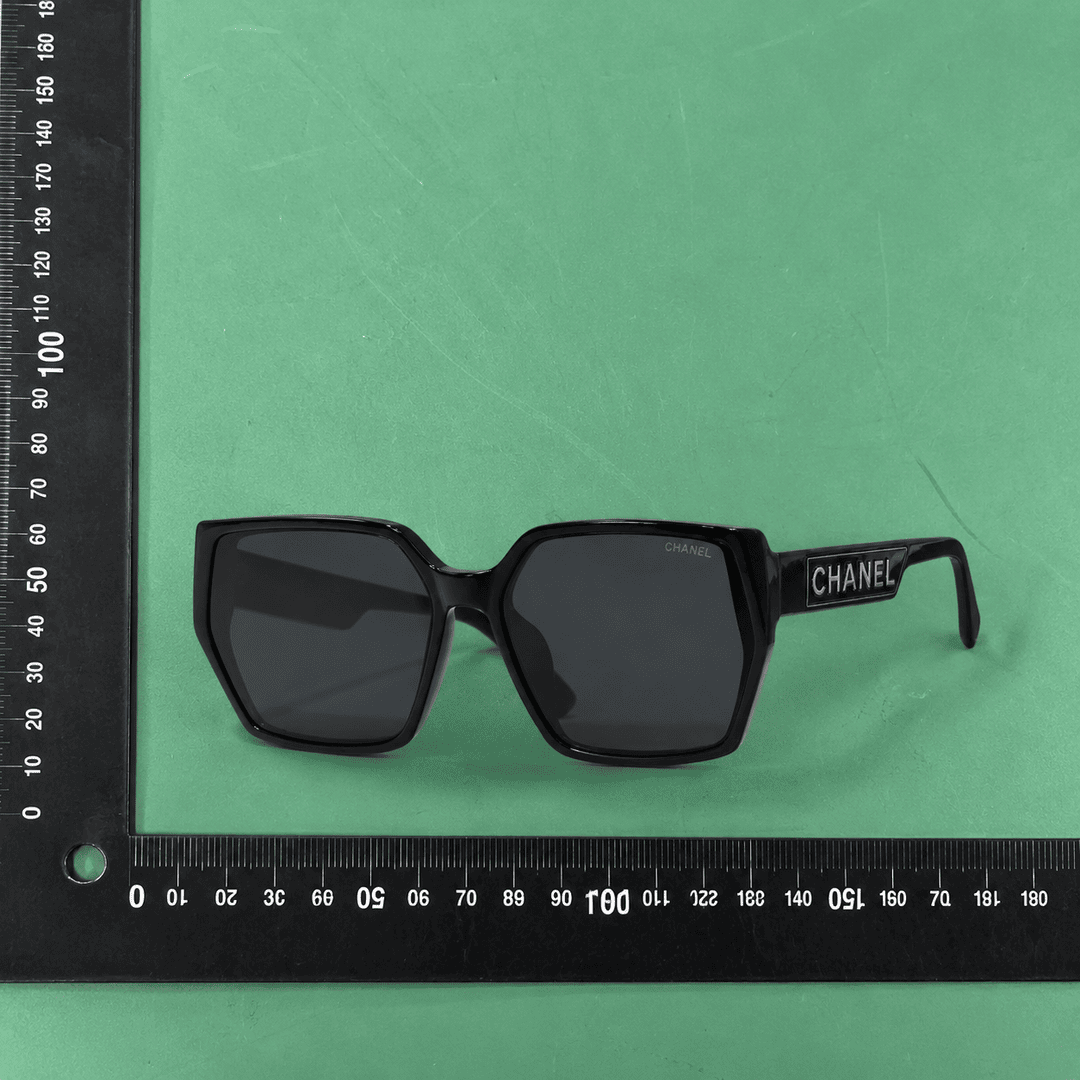
When viewing sunglasses QC photos on fashion-reps, the most important thing is not to first judge whether they look authentic, but to confirm that the photos actually correspond to the item you are about to purchase. This article focuses on a clear task: go to the product detail page, open the View QC Photos, record the details of lenses, frames, colors, prints, hardware, and visible flaws item by item, and then decide whether to keep, request additional photos, apply for processing, or postpone the order.
At present, the publicly verifiable QC photo page corresponds to a pair of Chanel black sunglasses, not an Oakley product. Therefore, this set of photos can only illustrate how to identify the product and the limits of evidence, and cannot serve as proof of Oakley lens, frame, or hinge quality. If your target product is Oakley, you should go back to the Oakley product detail page and then enter the exclusive gallery from the View QC Photos on that page. 🔎
The purchase task that Oakley sunglasses QC verification needs to solve
Before purchasing, you need to complete three things: confirm that the QC photos belong to the target product, confirm that the photos cover the key parts that affect the decision, and confirm that you know what to do next if problems are found.
This type of verification is not responsible for proving the authenticity of the product, nor does it guarantee wearing comfort, durability, or optical performance. QC photos can only provide visible appearance evidence at the time of shooting and from the shooting angle. Lens filtering performance, UV protection, material composition, and long-term hinge life cannot be confirmed solely from regular QC photos.
If the product name, color, specifications, or photo page do not correspond, all subsequent judgments should be paused. When the page does not match, continuing to zoom in on photos or compare details will only increase the risk of misjudgment. ⚠️
Confirm style, color, specifications, and link from the target site's product detail page
The correct path should be: first open the Oakley product detail page, then check the product name, product thumbnail, color description, specification information, and purchase entry, and finally click the View QC Photos on that page.
Do not guess the QC link directly from the homepage, brand page, search results, category page, or other product pages. Different products may use similar styles, same colors, or similar titles, and guessing the link directly cannot prove that the gallery belongs to the target product.
After entering the detail page, it is recommended to record the following information first:
- Product name and the brand and style description shown on the page
- Color, lens color, or frame color shown on the page
- Known size fields, such as lens width, bridge width, and temple length
- Current price and page update time of the product page, if provided
- Location of the View QC Photos button
- Whether the QC gallery still shows the same product name or product identification information after opening
The publicly verifiable page title this time is "Chanel Black Sunglasses in a Lightweight, Large-Lens Everyday Frame", and the brand and style on the page both point to Chanel, not Oakley. This difference is enough to prevent using this gallery as Oakley evidence. 📌

Image: The currently visible QC page evidence actually corresponds to the Chanel black sunglasses page and should not be used as Oakley product images.
Enter the real QC gallery of the corresponding product through View QC Photos
After entering the gallery, don't zoom in on local details first. The first step is to confirm the page context: whether the product name, brand, color, product main image thumbnail information, and QC photo collection are consistent.
If the button opens an empty gallery, a login page, another product page, or a photo collection without clear product identification information, record the status as "insufficient evidence" instead of attributing the photos to Oakley by default.
After entering the corresponding gallery, you can browse in the following order:
- Look at the full view first to confirm the product quantity, left-right orientation, and overall color.
- Then look at the close-ups of the front, side, temples, and lenses to look for structural and printing details.
- Finally, check the packaging, accessories, or partial supplementary photos, but do not treat packaging photos as evidence of the product itself.
- For each photo, record the shooting angle, covered parts, whether it is clear, and whether there are reflections, obstructions, or cropping.
Real QC original photos should be traceable back to the target product detail page. Only the photo file name, path, or similar appearance cannot independently prove product attribution.
Visible evidence of lens surface, edges, and left-right symmetry
Lens inspection should distinguish between "phenomena seen in the photo" and "risk judgments raised based on the phenomena". Key observations include:
- Whether there are obvious scratches, hazy spots, bubbles, indentations, or unexplained stains on the lens surface
- Whether there are chips, burrs, obvious notches, or assembly misalignment on the lens edges
- Whether the left and right lens colors are significantly inconsistent
- Whether the gap between the lens and frame differs significantly between left and right
- Whether the brand lettering, patterns, or markings on the lens are clear and whether the position is offset
- Whether strong reflections block the lens surface, making key areas impossible to judge
Not seeing scratches in the photo does not mean the lens has no scratches; the photo not showing the lens edge does not mean the edge is intact. If only a front long shot is visible, you can only record that "the front appearance is visible", not expand it to "the lens is flawless".
It is especially important to note that lens color and printing appearance do not equal optical or protective performance. If you care about UV protection, polarization effect, or prescription compatibility, you should ask the seller or shopping agent for verifiable specification information, and not treat QC photos as inspection reports.
How to record frame structure, nose pads, and hinge positions item by item
The frame part should be checked from the front, top, bottom, and side separately. When recording, you can use four columns of "part, visible condition, judgment, next step" to avoid writing speculation as fact.
| Check Part | Visible Evidence | Editor's Judgment | Next Step |
|---|---|---|---|
| Frame edge | Whether there are burrs, notches, obvious color bleeding, or left-right thickness difference | Affects appearance and assembly impression, but material strength cannot be judged from photos alone | Request close-ups of edges or side supplementary photos |
| Nose pads and bridge connection | Whether it is crooked, shows signs of looseness, color inconsistency, or obstruction | May affect fit, but photos cannot confirm wearing comfort | Ask for dimensions and supplement photos of the connection |
| Temple and frame connection | Whether the left and right connection positions are symmetrical and whether there are obvious gaps | Can be used to determine whether the appearance assembly needs further confirmation | Request left and right side photos at the same angle |
| Hinge | Whether screws, connectors, and closed state are visible | Can only judge visible appearance, cannot guarantee opening and closing life | Request hinge close-ups or operation videos |
| Temple lettering | Whether the text is clear, position is consistent, and whether it is blocked by reflections | Lettering appearance does not constitute a guarantee of authenticity | Record missing areas, do not fill in information on your own |
If only one temple or one hinge is photographed, do not infer that the other side is exactly the same based on this side. Left-right symmetry requires photos at the same angle and distance. 🕶️
How to separate product page specs, QC photos, and editor's judgment
Product page specs are text information provided on the page, such as color, size, or style description; QC photos are the visible state presented at the time of shooting; editor's judgment is the risk and action suggestions raised based on the first two types of materials. The three cannot be mixed.
For example, the product page says black, which does not mean the left and right lenses in the photo definitely have no color difference; seeing a hinge in the photo does not mean the hinge has passed durability testing; the page says a certain size, which does not mean the photo can prove the actual measured value is exactly the same as the page.
This page record shows that the product name of the public QC evidence belongs to Chanel black sunglasses, and the page description contains catalog information such as lightweight frame, large lenses, and curved temples, but does not provide corresponding evidence for Oakley products. Therefore, no specific quality conclusions can be made about Oakley lenses, frames, nose pads, lettering, and hinges.
In the editorial record, it is recommended to use the following wording:
- "The page text shows..."
- "The QC photos show..."
- "This angle cannot confirm..."
- "This is only an appearance risk warning, not a guarantee of authenticity or quality..."
- "You need the exclusive QC photos of the target product before continuing judgment..."
Avoid using expressions such as "authentic", "original factory", "absolutely flawless", "quality guarantee", or other expressions beyond the scope of photo evidence.
How to request additional photos when images are missing, reflective, or insufficient angles
When the photos are insufficient to support a decision, you should make specific requests for additional photos instead of just saying "please take clearer photos". The request should focus on actionable parts and angles:
- Please provide front, left and right side, and inner temple photos of the Oakley target product.
- Please shoot close-ups of the left and right lens edges separately, avoiding reflections blocking the surface.
- Please provide close-ups of the nose pads, frame, and temple connections.
- Please let the left and right hinges be photographed at the same distance and angle for symmetry comparison.
- Please supplement photos of temple lettering and any brand markings, but do not infer authenticity from photos.
- If size verification is needed, please provide actual measurement photos or numbers confirmed by the seller.
If the platform or agent cannot provide exclusive QC photos of the target product, or can only provide blurry, severely cropped, or reflection-blocked key areas, it is recommended to mark the record as "hold decision". This is not a denial of product quality, but the current evidence is insufficient to support ordering.
Final action: Keep, supplement evidence, apply for processing, or hold the order
The conditions for keeping are: the product detail page and QC gallery clearly correspond to the Oakley target product, the color and style are not significantly different, the key parts of lenses and frames are visible, and no unacceptable defects are found. Even if these conditions are met, it only means that the appearance evidence has reached your decision threshold, and does not mean authenticity, optical performance, or long-term durability is guaranteed.
The conditions for supplementing evidence are: the product attribution is clear, but the lens edges, hinges, nose pads, lettering, or left-right symmetry are still limited by reflections, angles, or clarity. In this case, you should first make specific requests for additional photos, and then decide whether to continue.
The conditions for applying for processing are: the target product does correspond, but the QC photos show obvious notches, cracks, severe color deviation, structural misalignment, lens edge damage, or other conditions inconsistent with the product description. The processing method should follow the actual after-sales window, evidence requirements, and applicable conditions of the shopping agent and seller.
The conditions for holding the order are: only the product page can be confirmed, but the corresponding QC gallery cannot be confirmed; the current photos actually belong to another brand or another product; all key parts are invisible; or you need conclusions that QC photos cannot prove, such as authenticity, UV protection, polarization, and durability.
The conclusion of this verification is very clear: the currently visible photos correspond to the Chanel page and cannot be used to confirm Oakley sunglasses. The most cost-effective approach is to first obtain exclusive QC evidence of the Oakley target product to avoid the risk of wrong ordering, restocking, or after-sales communication caused by misusing other product photos. ✅
Editor score 4.2 / 5