On this page
This guide focuses on the [Goyard](https://fashion-reps.net/brand/goyard) Saint Léger Backpack listing on fashion-reps and tackles a specific purchase task: after opening the QC photos for this item, determine whether the pictures match your order, and based on that, decide whether to proceed with the purchase, request additional photos, or pause for now. The article only uses what is directly visible in the images as evidence; the images cannot prove authenticity, long-term durability, or final
By Nathan ColeNathan Cole is Editor-in-Chief, covering residential and commercial lighting specification, LED driver behavior, illuminance and color measurement, and dimmer compatibility. They write most bulb and fixture reviews, keep the paper calibration log, and sign off on every final score. The bench protocol covers three illuminance distances, spectrometer readings at full, mid, and low dim, and a photodiode flicker run on the dimmer wall before scoring discussion. Every scored product requires a 30-day in-room period, and Nathan finalizes a score only when two of the three editors agree on the bench record.
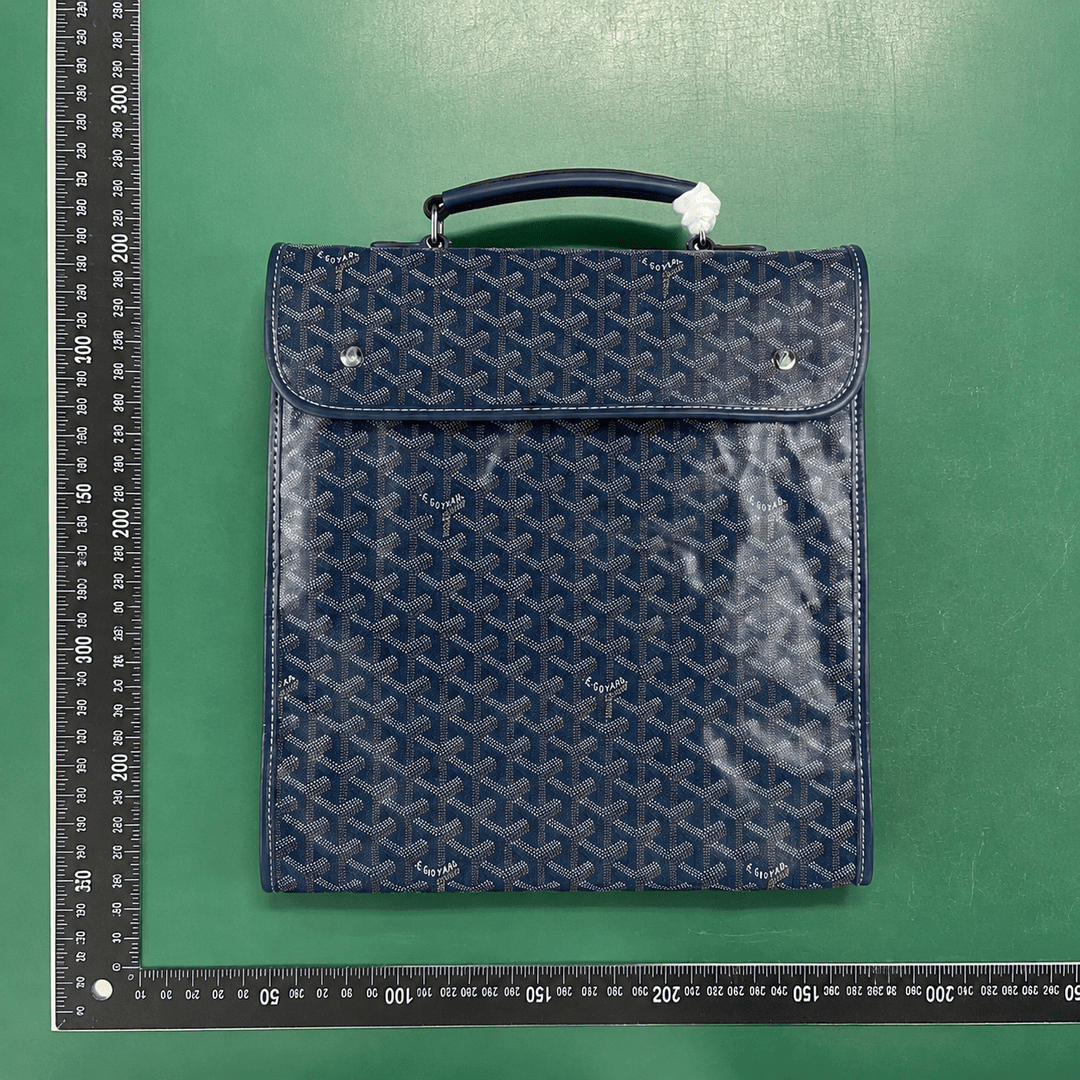
This guide focuses on the Goyard Saint Léger Backpack listing on fashion-reps and tackles a specific purchase task: after opening the QC photos for this item, determine whether the pictures match your order, and based on that, decide whether to proceed with the purchase, request additional photos, or pause for now. The article only uses what is directly visible in the images as evidence; the images cannot prove authenticity, long-term durability, or final quality assurance. 👜
The listing records the model as 2388, with stated dimensions of 34 × 32 × 15 cm. These dimensions, color, hardware configuration, and accessory information should all be based on your actual order and the agent's page. The listing page referenced in this article was last updated on September 26, 2026, so check price, stock, and purchase terms again before ordering.

Clarify the Purchase Task for Goyard Bag QC Photo Verification
Your goal is not to judge whether the bag "looks authentic" from a single photo, but to verify whether the item meets the visible requirements at the order level:
- Do the QC photos actually belong to the Goyard Saint Léger Backpack you purchased, and not a different color, size, or style from the same store?
- Can the photos clearly show the bag's silhouette, left-right symmetry, pattern alignment, stitching, hardware, interior, and included accessories?
- Are the issues found in the photos acceptable minor deviations, or are they defects that affect use, appearance, or subsequent return/exchange decisions?
- When evidence is insufficient, which specific area should you request additional photos for, instead of vaguely saying "please check quality"?
Also rule out situations that don't apply: if you need to confirm authenticity, material composition, long-term wear resistance, or actual load capacity, QC photos are usually insufficient for these judgments. They are better suited for pre-shipment checks of appearance, configuration, and obvious flaws.
Enter View QC Photos from the Goyard Product Detail Page
First, open the corresponding Goyard Saint Léger Backpack product detail page on fashion-reps and confirm the product name, model, images, and page description. Then use the link labeled View QC Photos on the page to enter the QC photo gallery for this item. Do not guess and combine QC URLs, and do not treat brand pages, category pages, product main images, or images of other products as evidence for this order.
After entering the gallery, record the following information:
- Whether the product name and model match.
- Whether the color, size, or variant matches the order.
- Whether the QC photos show multiple angles of the same bag, rather than mixed images of different items.
- Whether the images are clear and not cropped in a way that prevents judging key areas.
- Whether you can see the front, back, sides, bottom, interior, strap attachment points, and main hardware.
If the page only shows one or two distant shots, you cannot infer that the body, hardware, or accessories are problem-free; just record it as insufficient evidence. 📷
First Confirm the Photos Match the Style, Color, Size, and Order
Correspondence is the first check. Goyard patterns and bag silhouettes can vary by style, color, and size, and the same seller may have multiple similar styles available. Check item by item against your order:
| Check Item | Evidence to Look For in QC Photos | Action if Insufficient |
|---|---|---|
| Style | Bag silhouette, opening method, pocket layout, and strap structure match the product page | Request complete front, back, and interior structure photos |
| Color | Bag main color, edge paint, interior, and strap color are consistent | Request additional photos in natural or stable white light and compare with order variant |
| Size | Stated dimensions of 34 × 32 × 15 cm on the product page and visible proportions | Do not rely solely on photos; ask the agent to measure length, width, and thickness |
| Order Correspondence | Multiple consecutive angles of the same bag, order identification, or confirmation from the agent | Have the agent confirm which order and variant the photos correspond to |
| Accessories | Whether promised strap, pouch, or other included items appear in the same frame or separate shots | Request a list and photos of each item; do not treat page display items as actual accessories |
Size judgment requires special caution. Photos can help you spot proportional anomalies or obvious distortion, but cannot replace a tape measure. If you need to fit a laptop, documents, or travel items of specific dimensions, ask for actual measurements of the interior space, not just the external dimensions from the product page.
Check Bag Silhouette, Edges, Stitching, and Pattern Symmetry
Look at wide shots first, then zoom in on details. Wide shots help judge whether the overall silhouette is collapsed, skewed, or noticeably deformed; close-ups help examine edges, stitching, and patterns. It's best to follow a fixed order to avoid being distracted by the most eye-catching pattern.
Bag Silhouette and Symmetry
Compare the front and back shots together:
- Are the left and right heights, widths, and top opening roughly balanced?
- Does the bottom lean noticeably to one side, or do the bottom corners show unnatural collapse?
- Is the side thickness even, and are temporary creases from folding or shipping likely to recover?
- Are the strap attachment points at similar heights, and are stress points visibly off-center?
Here, "symmetry" is a visual judgment from the photo, not a claim that the actual bag is exactly identical after precise measurement. Shooting angle, stuffing inside the bag, and hanging method can all cause visual deviations, so only obvious skew that repeats across multiple angles is worth raising an issue about.
Edges and Stitching
Examine along the bag opening, side edges, bottom corners, and strap attachment points section by section:
- Is the edge paint or binding continuously broken, visibly lifting, overflowing, or largely uneven?
- Is there long-distance skipped stitching, severe crookedness, unprocessed thread ends, or sudden changes in stitch spacing?
- Are the bottom corners clearly cracked, crushed, or exposing internal structure?
- Are the handle and strap stress points reinforced or showing signs of loosening?
A single loose thread does not necessarily equal an unacceptable defect, but if threads are concentrated at stress points or accompanied by stitching pulling away from the edge, request closer photos and ask the agent about return/exchange or pre-sale handling. 🔍
Pattern and Print
Don't just look at whether the pattern is "nice"; check whether it corresponds to the bag structure:
- Does the pattern in the front center area show obvious abnormal breaks or sudden misalignment?
- Are the pattern density and direction on the left and right sides noticeably inconsistent due to panel joining?
- Is the pattern at the bag opening, bottom corners, pocket edges, and stitching pulled, severely distorted, or largely blurred?
- Are color differences at different angles just lighting changes, or is there a real color mismatch?
Pattern symmetry is not perfectly consistent on all soft bags, and it alone cannot determine authenticity. Its practical use is to help you spot obvious anomalies in cutting, joining, or printing. If a pattern issue appears only in one photo with heavy reflection, ask for additional photos first, rather than jumping to conclusions.
Check the Visible Condition of Hardware, Interior, Straps, and Included Accessories
Hardware checks should look at quantity, position, color, and connection status simultaneously. Don't treat shiny metal parts in wide shots as clear evidence just because they reflect light.
Focus on:
- Are zippers, snaps, rings, or other hardware complete, and are their positions consistent with the style?
- Does the hardware surface show obvious deep scratches, color loss, dents, or edge deformation?
- Are strap rings, buckles, and adjustment points fully installed and visibly aligned?
- Can you see the closed state of snaps or zippers in the photos; if you only see the exterior, you cannot infer actual smoothness.
- Does the interior show obvious stains, holes, loose threads, crease marks, or unprocessed thread ends?
- Do the promised accessories appear one by one, and do their appearances match the order style?
For the Saint Léger Backpack, the product page emphasizes its foldable storage, internal and external pockets, and detachable strap. Here you should treat the page description as a checklist to verify, not as proof that your specific item has passed inspection. Especially the strap, back pocket, snaps, and interior structure are best seen in clear close-ups before judging.
If the seller or agent does not show the interior, bottom, back security pocket, or strap attachment points, mark these areas as "unconfirmed" rather than assuming they are normal. ✅
How to Request Additional Photos by Problem Area When Key Angles Are Missing
The more specific your photo request, the more likely you are to get usable evidence. You can break it down by location and purpose:
- Bag body: Please take complete photos of the front, back, left side, right side, and bottom, keeping the bag naturally expanded.
- Symmetry: Please keep the camera level for the front, and take close-ups of the top opening, bottom edge, and both bottom corners.
- Pattern: Please take close-ups of the front center, left and right edges, pocket edges, and bottom corners, avoiding strong reflections and heavy filters.
- Stitching: Please photograph the bag opening, side edges, bottom corners, strap attachment points, and interior pocket openings up close.
- Hardware: Please photograph zippers, snaps, rings, and adjustment pieces one by one, showing the front, back, and connection points.
- Interior: Please open the main compartment and photograph the bottom, side seams, interior pockets, and any stains or loose threads.
- Accessories: Please place the strap, pouch, and other promised accessories separately and photograph them together with the bag.
- Size: Please use a tape measure to measure external length, width, and thickness; if you have specific storage needs, also measure the main interior space.
Don't just say "please check for problems." A more effective approach is to point out the specific location, the angle needed, and the fact you want to confirm, such as "Please take a photo of the back of the right strap ring to confirm if there is deformation or color loss."
Distinguish Visible Evidence, Editorial Judgment, and Unconfirmable Authenticity Conclusions
QC photos support limited judgments, but cannot be extrapolated indefinitely. Record in three layers:
Visible evidence: Content directly identifiable in the photos, such as whether a piece of hardware is present, whether there is an obvious crease on the bottom, whether there is a loose thread on a section of stitching, or whether colors are consistent across angles.
Editorial judgment: Careful judgments based on multiple angles, such as the bag may have left-right imbalance, a certain area needs additional photos, or the pattern may be significantly misaligned at the seam. Such judgments should include qualifiers like "looks like," "possibly," or "needs confirmation."
Unconfirmable: Authenticity, material composition, actual feel, long-term durability, load capacity, recovery after shipping, whether the agent will ultimately accept returns/exchanges, and the condition of areas not shown in photos.
Do not write observations from product photos as if you have touched the material, personally used the item, or completed experiments. This article also does not provide a guarantee of authenticity. If authenticity or high-value loss is your main risk, learn about the agent's dispute, return, and after-sales policies before paying, and keep the product page, order information, QC photos, and chat records.
Final Action: Preserve Evidence, Then Decide to Proceed, Ask More, or Pause
After completing the verification, save the product page, order variant, QC photos, and photo requests in the same record. It is recommended to decide among three outcomes:
Proceed: Style, color, size, and accessories match the order, key angles are clear, no obvious defects affecting use or appearance are found, and you accept the limitation that photos cannot prove authenticity and long-term quality.
Ask more: There are clear but verifiable gaps, such as no interior photos, blurry strap attachment areas, hardware only in wide shots, or size being critical for your use. Get additional photos, measurements, or confirmation of after-sales terms first, then decide.
Pause: The photos clearly show the wrong style or color, or reveal structural skew, severe cracking, missing key accessories, or the agent cannot provide necessary evidence. In this case, do not default to shipping just because you have already waited or paid a service fee.
This verification method does not save a fixed amount of money, but it reduces the handling costs after incorrect shipments, configuration mismatches, and packages with obvious flaws enter international shipping. It will increase the time spent waiting for additional photos, communicating, and possibly changing items, and it cannot eliminate risks related to authenticity, materials, or long-term durability. It is suitable for buyers willing to check item by item before shipping; if you don't care about specific colors, sizes, accessories, and appearance details, or cannot accept uncertain after-sales conditions from the agent, it is not recommended to make high-confidence purchase decisions based solely on QC photos.
Editor score 4.2 / 5